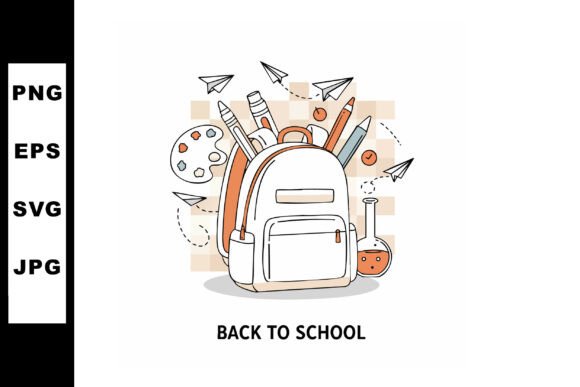
School Backpack with Stationery and Paper: A Visual Asset for Education Workflows
In the realm of digital design and content creation, the right visual asset can define the tone of a project before a single word is written. The School Backpack with Stationery and Paper illustration serves as more than just a decorative image; it is a functional component in the broader workflow of educational marketing, curriculum development, and brand storytelling. This specific asset, characterized by a cheerful mood and dynamic composition featuring flying paper planes, offers a versatile foundation for professionals aiming to communicate themes of learning, creativity, and preparation effectively.
For educators, marketers, and small business owners, integrating high-quality vector and raster graphics into a production pipeline requires an understanding of both aesthetic value and technical utility. This article explores how this specific illustration fits into real-world processes, from initial concept planning to final deployment across various media channels.
The Role of Visual Assets in Educational Planning
Before any creative execution begins, there is a phase of strategic planning where the visual language of a project is established. Whether you are designing a syllabus cover, creating a landing page for a tutoring service, or preparing a presentation for a school board meeting, the choice of imagery sets expectations. The School Backpack with Stationery and Paper illustration acts as a primary anchor for these decisions.
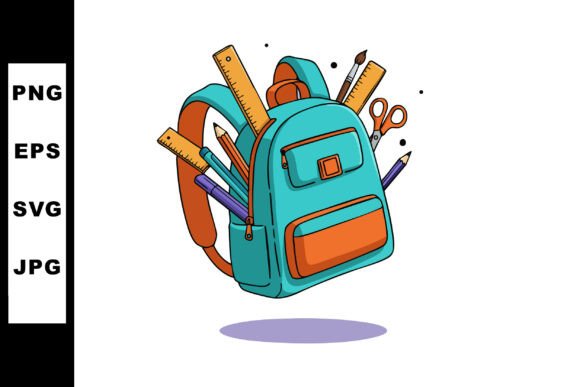
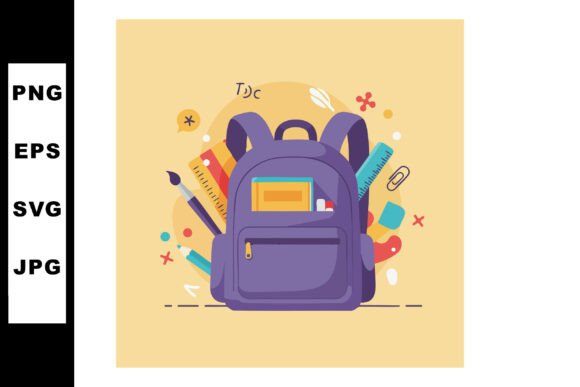
This asset depicts a school backpack overflowing with pencils, markers, and a paint palette, surrounded by paper planes in mid-flight. The composition suggests movement and energy, which is crucial for engaging audiences who may be fatigued by static, traditional educational imagery. In the planning stage, selecting this type of illustration signals a commitment to a modern, active approach to learning. It moves away from rigid, textbook-style visuals toward something that feels organic and inspiring.
When evaluating assets for a project, consider the narrative arc you wish to convey. Does your content focus on the tools of the trade, the joy of discovery, or the structured nature of schooling? This specific illustration balances all three elements. The backpack represents organization and readiness, while the scattered stationery and flying planes introduce an element of play and imagination. By incorporating this visual early in the planning process, teams can align their messaging around a theme of "prepared creativity."
Technical Integration and File Compatibility
A critical aspect of professional workflows is ensuring that visual assets are compatible with the tools and platforms used throughout the production cycle. The School Backpack with Stationery and Paper package typically includes SVG, EPS, JPG, and PNG files. Understanding the specific utility of each format is essential for maintaining quality control and efficiency.
- SVG (Scalable Vector Graphics): Ideal for web applications, responsive design, and UI elements. Because SVGs are resolution-independent, they ensure that the backpack and stationery remain crisp on high-resolution displays without increasing file size significantly.
- EPS (Encapsulated PostScript): The standard for print production. If your workflow involves large-format printing, such as banners for an open house event or brochures for a supply drive, the EPS file allows for scaling without pixelation and integrates seamlessly with desktop publishing software like Adobe Illustrator or InDesign.
- PNG (Portable Network Graphics): Best for digital overlays, social media posts, and presentations where transparency is required. The PNG version allows designers to place the backpack over complex backgrounds while maintaining clean edges.
- JPG (Joint Photographic Experts Group): Suitable for email newsletters and general web use where file size optimization is a priority over perfect edge definition.
Having access to this variety within a single downloadable ZIP file streamlines the asset management process. It eliminates the need for third-party conversion tools, reducing the risk of data loss or color shifting during the transition between design phases. For freelancers and small teams, this comprehensive package supports a faster turnaround time, allowing resources to be focused on strategy rather than technical troubleshooting.
Application Across Different Stages of a Project
The versatility of the School Backpack with Stationery and Paper illustration allows it to serve distinct purposes at various stages of a project lifecycle.
Pre-Project: Conceptualization and Mood Boards
During the ideation phase, this asset can be used in mood boards to establish the visual direction of a campaign. Its cheerful mood helps stakeholders visualize the emotional impact of the final product. When pitching ideas to clients or school administrators, using a vibrant, well-composed illustration demonstrates attention to detail and a clear vision for the brand identity.
During Execution: Content Creation and Layout
Once the project moves into the execution phase, the illustration becomes a core element of the layout. Designers can manipulate the vector layers to adjust colors to match specific brand guidelines. For instance, a private academy might adjust the marker colors to align with their institutional palette, while keeping the dynamic arrangement of the paper planes intact. The floating paper planes provide negative space that can be utilized for typography, headlines, or call-to-action buttons, making the asset highly functional for graphic design tasks.
Post-Project: Analysis and Iteration
After deployment, the performance of the visual asset can be analyzed. Did the cheerful imagery increase engagement on social media? Did the clear depiction of stationery improve click-through rates for an online store selling school supplies? The modular nature of the file formats allows for easy iteration. If a specific color scheme underperforms, the vector files allow for quick adjustments in future campaigns without needing to commission new artwork.
Workflow Optimization and Consistency
Maintaining consistency across multiple touchpoints is a challenge for many organizations. Using a standardized asset like the School Backpack with Stationery and Paper helps enforce visual coherence. When the same core imagery appears on a website, a printed flyer, and a social media graphic, it builds brand recognition and trust.
To integrate this asset smoothly into your routine, consider establishing a style guide that dictates how the illustration should be used. Define rules for color variations, acceptable background combinations, and placement relative to text. This ensures that every team member, whether an internal designer or an external contractor, applies the asset in a way that supports the overall brand strategy.
Furthermore, the inclusion of diverse stationery items—pencils, markers, and a paint palette—allows for thematic flexibility. A math-focused campaign might emphasize the pencils and rulers, while an art program could highlight the paint palette. This adaptability reduces the need for multiple separate assets, simplifying the asset library and making it easier to manage long-term.
Practical Implementation Tips for Professionals
For those looking to maximize the utility of this illustration, several practical steps can enhance its effectiveness:
- Optimize for Speed: When using the PNG or JPG versions for web content, compress the files appropriately to ensure fast loading times without sacrificing visual clarity. Fast load times are crucial for user experience and SEO rankings.
- Leverage Transparency: Use the PNG files to create layered compositions. Placing the backpack over a photo of a classroom or a textured paper background can add depth and realism to the design.
- Customize for Accessibility: Ensure that the contrast between the illustration and the background meets accessibility standards. While the original image is cheerful and colorful, adapting the saturation or adding outlines can make it more legible for users with visual impairments.
- Cross-Platform Testing: Before finalizing a design, preview the asset on different devices. The vector nature of the SVG ensures scalability, but testing confirms that the details of the flying paper planes and stationery remain visible on smaller screens.
By treating the School Backpack with Stationery and Paper not just as a picture but as a strategic tool, professionals can elevate the quality of their output. It bridges the gap between abstract educational concepts and tangible visual communication, providing a reliable resource for anyone involved in the planning, execution, and delivery of educational content.
Ultimately, the value of this asset lies in its ability to support a cohesive workflow. From the initial spark of an idea to the final distribution of materials, having a high-quality, multi-format illustration ready for use streamlines operations and enhances the final result. Whether you are a marketer crafting a campaign, an educator designing a lesson plan, or a freelancer building a portfolio, this visual resource offers the flexibility and quality needed to succeed in a competitive landscape.