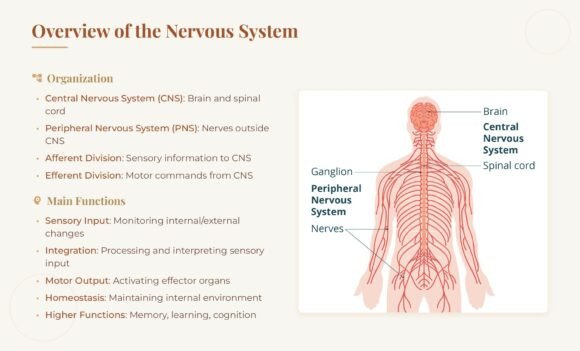
Mastering Medical School Anatomy Slides Nervous System Content
Navigating the intricacies of the human nervous system is one of the most demanding challenges in medical education and healthcare training. The sheer volume of information, from the microscopic interactions of glial cells to the macroscopic pathways of the spinal cord, can quickly become overwhelming for students and educators alike. This is where high-quality Medical School Anatomy Slides Nervous resources become indispensable. These are not just collections of bullet points; they are structured educational frameworks designed to translate complex physiological concepts into clear, visual narratives. Whether you are a pre-med student cramming for finals or a seasoned professor preparing a semester-long curriculum, having a reliable, professionally designed presentation template can transform the learning experience from a struggle into a streamlined process.
The Core Value of Structured Visual Learning
At its heart, the Medical School Anatomy Slides Nervous template serves as a bridge between dense textbook theory and practical understanding. The nervous system is abstract by nature. You cannot simply look at a neuron and intuitively understand how an action potential propagates without visual aids that break down the electrical and chemical processes. A well-constructed slide deck does exactly this. It organizes the content logically, moving from the cellular level—exploring neurons and their support structures—to the gross anatomy of the brain and spinal cord.
For educators, the value lies in consistency and clarity. Instead of spending hours searching for diagrams that match your lecture notes or struggling to format text to fit a timeline, a comprehensive template provides a cohesive flow. The warm, academic color palette often found in these resources isn't just an aesthetic choice; it reduces cognitive load, making the material feel approachable rather than intimidating. When a student looks at a slide detailing the difference between the Central Nervous System (CNS) and the Peripheral Nervous System (PNS), the visual distinction should be immediate. This design philosophy ensures that the focus remains on the content, not on deciphering a cluttered layout.
Real-World Applications for Educators and Students
The utility of these slides extends far beyond the traditional university lecture hall. Consider the scenario of a nursing educator at a community college. They need to cover the somatic and autonomic nervous systems within a limited timeframe. Using a pre-designed deck allows them to skip the formatting phase and dive straight into teaching. They can annotate specific areas, perhaps highlighting the major pathways of the spinal cord, and then immediately engage the class with case studies. The time saved on design work translates directly into more time for interactive learning and Q&A sessions.
On the student side, the application is equally powerful. Imagine a study group of five medical students preparing for a board exam. One student has downloaded the Medical School Anatomy Slives Nervous resource. Instead of each person creating their own confusing summary sheets, they project the slides and use them as a central reference point. The logical flow of the presentation helps them visualize the "story" of nerve impulse transmission. They can pause on a slide about the cerebrum's lobes and discuss clinical correlations, such as what happens when a specific area is damaged during a stroke. This collaborative approach turns passive reading into active problem-solving.
Beyond the Classroom: Professional and Clinical Uses
While the primary audience includes students and teachers, the versatility of these resources makes them valuable for practicing healthcare professionals as well. Therapists, chiropractors, and physical therapists often need to explain neurological conditions to patients who have no medical background. Explaining the function of the cerebellum or the role of glial cells using jargon-heavy textbooks is rarely effective. A simplified, visually engaging slide deck allows a practitioner to show a patient exactly where pain signals originate or how the autonomic nervous system affects their stress response.
In a commercial setting, such as a biotech startup or a medical device company, these slides can be adapted for training new sales representatives. Understanding the anatomy of the nervous system is crucial when selling products related to neurology, pain management, or rehabilitation. A representative who can confidently explain the difference between the sympathetic and parasympathetic divisions using a clear diagram will build much more trust with hospital administrators and doctors than one who relies on vague descriptions.
Specific Scenarios for High-Impact Learning
- High School AP Biology Classes: Teachers can use simplified versions of these slides to introduce advanced concepts early. By focusing on the basic structure of a neuron and the general organization of the brain, they prepare students for future STEM careers without overwhelming them.
- Patient Education Workshops: Hospitals hosting workshops on Parkinson's disease or Multiple Sclerosis can utilize the brain structure sections to help families understand the pathology. Seeing the affected areas highlighted on a clean diagram demystifies the diagnosis.
- Continuing Medical Education (CME): For doctors needing to refresh their knowledge on neuroanatomy before a specialization rotation, these slides offer a rapid review tool. The concise text and clear diagrams allow for efficient re-learning of key functions and pathways.
- Chiropractic Training: Instructors can use the spinal cord anatomy sections to demonstrate the relationship between vertebral alignment and nerve function, providing a visual basis for treatment techniques.
Evaluating Your Needs Before You Choose
Before downloading or purchasing a Medical School Anatomy Slides Nervous template, it is essential to assess your specific requirements. Not all resources are created equal, and the depth of content varies significantly. If you are teaching a basic biology course, a deck that dives too deep into molecular neurotransmission might confuse your students. Conversely, a medical student needs granular detail regarding the specific tracts of the spinal cord and the nuances of glial cell functions.
Consider the flexibility of the template. Can you easily customize the text? Are the images high-resolution enough to project in a large auditorium without pixelation? A good resource should act as a robust foundation that you can build upon, not a rigid script that forces you to conform to its limitations. Additionally, check the accuracy of the anatomical diagrams. In the field of neuroscience, precision is non-negotiable. An incorrect label on the brainstem could lead to fundamental misunderstandings that persist throughout a student's career.
Another factor to weigh is the intended outcome. Are you looking to save time on administrative tasks, or do you need a tool to fundamentally change how your audience perceives the subject? If the goal is engagement, look for slides that incorporate logical flows and visual storytelling rather than walls of text. The best templates balance professional rigor with pedagogical effectiveness, ensuring that the complexity of the nervous system is broken down into digestible segments without losing scientific integrity.
Maximizing the Investment in Educational Resources
Ultimately, investing in quality Medical School Anatomy Slides Nervous materials is an investment in better outcomes. For the student, it means higher retention rates and less anxiety during exams. For the educator, it means more dynamic classes and satisfied learners. For the clinician, it means clearer communication with patients and colleagues. The human nervous system is a marvel of biological engineering, and understanding it requires tools that match its complexity. By choosing a resource that prioritizes clarity, accuracy, and visual engagement, you ensure that the intricate dance of neurons and synapses is not just memorized, but truly understood.
Whether you are standing in front of a classroom, sitting in a study group, or explaining a diagnosis to a worried family member, the right visual aid can make all the difference. It transforms abstract data into concrete knowledge, empowering everyone involved to navigate the complexities of the nervous system with confidence and clarity. In a world where information is abundant but understanding is scarce, these specialized slides provide the necessary roadmap to master one of the most critical systems in the human body.