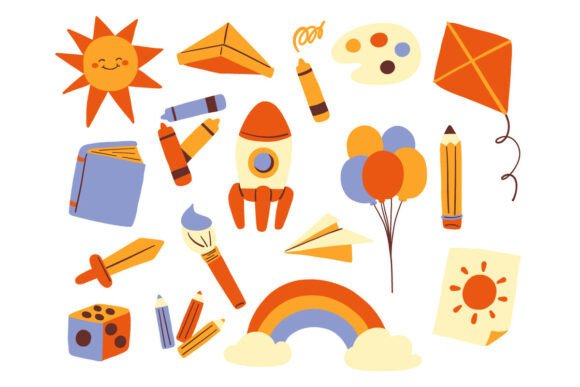
Flat Style Creative School and Art Icon
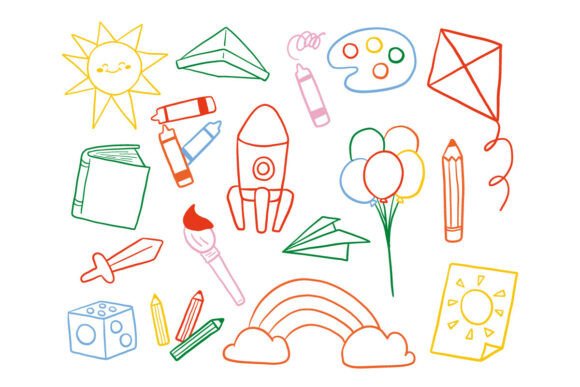
In the crowded landscape of digital design, clarity often wins. The Flat Style Creative School and Art Icon collection offers exactly that: a vibrant, uncluttered visual language perfect for modern educational projects. This colorful set of hand-drawn flat style elements includes books, pencils, crayons, balloons, suns, rainbows, and rockets, all designed to bring a playful energy to classroom themes. Unlike complex 3D renderings or overly detailed illustrations, these icons prioritize immediate recognition and versatility, making them an essential asset for anyone communicating ideas about learning, growth, and creativity.
What makes this specific collection stand out is its balance between professional utility and childlike wonder. The hand-drawn aesthetic softens the rigid edges of standard geometric shapes, adding a human touch that resonates with both children and adults. Whether you are designing a curriculum guide, a marketing campaign for a tutoring service, or a personal blog about homeschooling, these elements provide a cohesive visual foundation. The inclusion of diverse items like a rocket alongside traditional school supplies suggests a forward-thinking approach to education, blending foundational learning with aspirations for the future.
Why Flat Design Works for Education
The shift toward flat design in the creative industry was driven by a need for speed, scalability, and readability across devices. In an educational context, these benefits are amplified. When students or parents view a website on a smartphone, small details can get lost. The bold colors and simple lines found in the Flat Style Creative School and Art Icon set ensure that the message remains clear regardless of screen size.
Furthermore, flat design reduces cognitive load. By stripping away unnecessary textures and shadows, the viewer focuses immediately on the subject matter. A pencil icon doesn't just look like a drawing; it instantly communicates "writing" or "study." This semantic clarity is crucial for educators and marketers who need to convey information quickly. The playful nature of the hand-drawn style adds an emotional layer, making the content feel welcoming rather than sterile. It transforms a standard informational graphic into an inviting experience.
Practical Applications for Creators and Educators
The versatility of this icon set allows for a wide range of practical applications. For teachers creating lesson plans, these graphics can serve as section dividers, activity markers, or reward stickers in digital worksheets. Imagine a reading comprehension quiz where each question is introduced by a different book icon, or a math worksheet where correct answers are celebrated with a rainbow or balloon. These small touches make digital learning materials feel more tactile and engaging.
For freelancers and designers working on branding for schools or ed-tech startups, the collection provides a consistent visual identity. You can use the rocket icon to represent innovation or advanced courses, while the crayons symbolize early childhood development. This thematic consistency helps build trust with your audience. If you are a publisher creating e-books for young readers, these icons can be used as chapter headers or navigation buttons, guiding the user through the story without breaking immersion.
Marketers can also leverage these assets for social media campaigns. A carousel post explaining study tips could use the pencil and book icons to break down steps visually. The bright color palette naturally draws the eye in a scrolling feed, increasing engagement rates. Because the files come in multiple formats, including SVG and EPS, they remain crisp whether used in a high-resolution print brochure or a tiny Instagram story sticker.
Adapting the Assets for Different Audiences
One of the strengths of the Flat Style Creative School and Art Icon pack is its adaptability. While the default colors are bright and cheerful, they are not fixed. Designers can easily recolor the vectors to match specific brand guidelines or seasonal themes. For a university setting, you might tone down the saturation to create a more mature, academic look while retaining the friendly shape of the icons. Conversely, for a kindergarten app, you might increase the vibrancy and add slight animations to the balloons or sun.
Small business owners running online workshops can use these icons to categorize their course modules. A rocket could signify "Advanced Strategies," while a crayon represents "Beginner Basics." This visual coding helps users navigate your platform intuitively. Bloggers writing about parenting or education can use the icons as featured images or inline graphics to break up long text blocks, improving readability and keeping the reader engaged.
It is also important to consider cultural interpretations when using these symbols globally. While a book or a sun is universally understood, ensuring the context remains positive is key. The hand-drawn style helps here, as it feels organic and less corporate, bridging gaps between different demographics. By focusing on universal symbols of learning and joy, you create content that feels inclusive and accessible to a global audience.
Technical Workflow and File Management
To get the most out of this resource, understanding the file formats included in the ZIP package is essential. The collection contains EPS, JPG, PNG, and SVG files, each serving a specific purpose in your workflow. For vector-based editing, the EPS and SVG files are your primary tools. These allow you to scale the icons infinitely without losing quality, which is vital for large-format printing or high-DPI displays. You can open these files in software like Adobe Illustrator or Inkscape to modify paths, change stroke weights, or combine elements into custom compositions.
If you need quick raster images for web use, the PNG files with transparent backgrounds are ideal. They drop seamlessly onto any background color or image, maintaining clean edges. The JPG versions are useful for previews or when file size is a constraint, though they lack transparency. Organizing your project folder effectively will save time. Create subfolders for different formats and keep a master copy of the original vector files untouched. This ensures that if you need to make adjustments later, you always have a clean source to return to.
Maintaining Consistency and Originality
While these icons provide a strong starting point, true creativity comes from how you combine and contextualize them. Avoid simply scattering icons randomly across a page. Instead, use them to create a narrative flow. For example, arrange the pencil, book, and rocket in a progression to tell a story of learning leading to achievement. Use whitespace effectively to let the icons breathe; cluttering the design defeats the purpose of the flat style's simplicity.
To maintain originality, consider mixing these icons with other design elements. Pair the flat style icons with typography that complements their rounded, friendly nature. Handwritten fonts work particularly well with the hand-drawn aesthetic of the art icons. You can also experiment with layering, placing a subtle shadow behind the flat icons to give them depth without compromising the overall style. Remember that the goal is to support your content, not overpower it. The icons should enhance the message, acting as visual anchors that guide the viewer's attention.
Ultimately, the Flat Style Creative School and Art Icon set is more than just a collection of images; it is a toolkit for effective communication. By leveraging its versatility, technical flexibility, and inherent playfulness, creators can produce work that is both functional and inspiring. Whether you are building a classroom resource, launching a new product, or sharing knowledge online, these elements offer a reliable way to connect with your audience through the universal language of design.