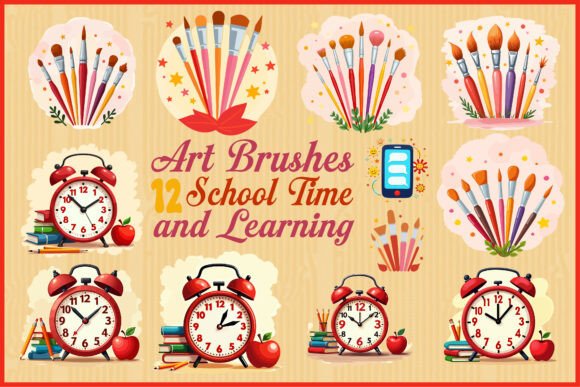
Art Brushes, School Time and Learning: A Guide to Smart Graphic Choices
In the world of digital design, the difference between a professional-looking project and an amateur one often comes down to the assets you choose. When educators, marketers, or small business owners need to convey the dual themes of creativity and structure, they frequently turn to resources like the Art Brushes, School Time and Learning clipart bundle. This specific collection is designed to bridge the gap between the chaotic energy of artistic expression and the disciplined rhythm of academic life. However, simply downloading a set of images does not guarantee a successful design. Many creators overlook critical details regarding file formats, visual consistency, and thematic application, leading to projects that look disjointed or fail to communicate their intended message.
Understanding what makes this particular bundle valuable—and where users commonly stumble—is essential for anyone looking to elevate their educational materials, back-to-school flyers, or time-management posters. The goal is not just to fill space with graphics, but to use them strategically to enhance readability, engagement, and brand identity.
The Value of Thematic Consistency in Educational Design
The Art Brushes, School Time and Learning collection is unique because it juxtaposes two distinct concepts: the fluid, organic nature of art supplies and the rigid, structured symbols of school time. You will find fanned-out paint brushes arranged in colorful bouquets alongside classic red alarm clocks resting on stacks of books. There are also accents like vibrant mobile phones and crisp red apples. This combination is powerful when used correctly. It tells a story about balancing creative freedom with punctuality and study habits.
People are interested in this type of bundle because it solves a common problem: finding assets that speak both languages. An art teacher needs visuals that scream "creativity," while a tutor focusing on time management needs visuals that suggest "discipline." Using a single, cohesive set ensures that your final design doesn't look like a patchwork quilt of mismatched styles. If you pull a watercolor-style brush from one source and a 3D-rendered clock from another, the result is visual noise that distracts the viewer from your core message.
Common Mistakes When Selecting Clipart Bundles
Despite the clear benefits, many designers make avoidable errors when evaluating and purchasing clipart bundles. One of the most frequent mistakes is ignoring the file format requirements before making a purchase. Just because a bundle includes PNG, JPG, SVG, and EPS files does not mean every user knows which one to use for their specific project.
Mistake 1: Using Raster Files for Large-Scale Printing
A common oversight is using the included JPG or PNG files for large-format printing, such as classroom banners or workshop flyers. While these high-resolution raster images work perfectly for digital planners, social media posts, or standard document inserts, they can become pixelated or blurry when scaled up significantly. If you plan to print a poster that covers an entire wall, relying solely on the PNG version can ruin the professional finish of your material.
Mistake 2: Overlooking Background Transparency
Another issue arises when designers do not verify the transparency of their background layers. In the Art Brushes, School Time and Learning bundle, the PNG files come with transparent backgrounds, which is ideal for layering over colored text boxes or photos. However, if a user accidentally selects the JPG version for a layered design, they will be left with unwanted white squares around their alarm clocks and paint brushes. This forces a time-consuming cleanup process or results in a design that looks unpolished.
Mistake 3: Ignoring Style Consistency
Some users treat clipart as a grab-bag, mixing elements from this bundle with other graphics found online without checking the aesthetic compatibility. The charm of this specific set lies in its clean, friendly cartoon style. Mixing these soft, flowing illustrations with hyper-realistic photography or stark, minimalist line art creates a jarring visual experience. The result is a design that lacks cohesion and fails to establish a trustworthy tone for students or parents.
How These Errors Impact Your Projects
The consequences of these mistakes go beyond simple aesthetics. When a flyer for an art workshop features pixelated images, it undermines the perceived quality of the class itself. Parents and students may subconsciously assume that if the marketing materials are low-quality, the instruction will be too. Similarly, a digital planner sticker sheet that includes opaque white backgrounds can break the immersion of a well-designed template, making it difficult to read or use effectively.
Furthermore, inefficiency in the design process costs time and money. Spending hours trying to remove white backgrounds from JPGs or scaling up low-res images only to find they are unusable is a waste of resources that could be spent on content creation or strategy. For educators and freelancers, presenting a polished, consistent visual identity is crucial for building authority and attracting clients.
Practical Steps for Better Results
To avoid these pitfalls and maximize the potential of the Art Brushes, School Time and Learning bundle, follow these practical guidelines:
- Match the File Format to the Output: Always use SVG or EPS files for any project that requires resizing, such as logos, large banners, or variable-sized advertisements. These vector formats ensure crisp edges at any size. Reserve PNGs for web use, presentations, and documents where the size is fixed. Use JPGs only when you need a compressed image for email attachments or quick previews.
- Preview Before Finalizing: Before committing to a layout, place the clipart elements against different background colors. Check how the transparent PNGs interact with dark or light themes. Ensure the red alarm clocks and colorful brushes stand out clearly without blending into the background.
- Stick to the Theme: Leverage the built-in narrative of the bundle. Use the paint brushes to highlight sections about creativity, brainstorming, or open-ended projects. Pair the alarm clocks and books with sections on deadlines, schedules, or exam preparation. This intentional pairing reinforces the message of balancing fun and focus.
- Check Licensing Restrictions: Even with high-quality bundles, always review the license agreement. Some bundles allow personal use only, while others permit commercial applications. Using a "personal use" asset for a client's marketing campaign can lead to legal issues and reputational damage.
Evaluating Quality Before You Download
Before you decide to integrate these graphics into your workflow, take a moment to inspect the preview images closely. Look for clean lines and consistent coloring. In the Art Brushes, School Time and Learning collection, the attention to detail in the fanned-out brushes and the charming rendering of the traditional alarm clocks should be evident. If the preview images look muddy or inconsistent, the full-resolution files likely will too.
Also, consider the versatility of the assets. Can the mobile phone icon be easily resized without losing clarity? Do the book stacks offer enough variety to create different compositions? A good bundle offers flexibility. If you find yourself needing to edit the images heavily to make them fit your design, it might be a sign that the assets aren't quite right for your needs, regardless of the file types included.
Conclusion: Investing in Visual Clarity
Choosing the right graphic assets is a strategic decision that impacts how your audience perceives your message. The Art Brushes, School Time and Learning clipart bundle offers a robust toolkit for anyone looking to merge the worlds of art and academics. By understanding the technical requirements of file formats, maintaining stylistic consistency, and applying the imagery thoughtfully, you can avoid common design traps.
Whether you are creating a time management poster for a classroom, designing stickers for a digital planner, or putting together a flyer for a summer art camp, the quality of your visuals matters. Take the time to evaluate your options, choose the correct file types for your medium, and let the imagery support your content rather than distract from it. With the right approach, these illustrations can transform a standard document into an engaging, professional, and memorable piece of communication.